Buying Car Parts Online: OEM vs Aftermarket, Without the Mistakes
Buying your own parts online saves money — if you avoid wrong-fitment orders, counterfeits, and core-charge surprises. Here is when to buy OEM, when aftermarket wins, and how to shop safely.
This article contains affiliate links — if you buy through them, we may earn a commission at no extra cost to you.
Buying your own car parts online can save you real money over the dealer counter and the corner shop — but only if you dodge the traps that catch first-timers: ordering the wrong part for your car, getting stung by a counterfeit, or being surprised by a core charge at checkout. The good news is that none of these are hard to avoid once you know the rules. Here is how to shop smart, when to insist on OEM, when aftermarket is the better buy, and where a couple of reliable sources fit in.
OEM vs Aftermarket: What the Terms Actually Mean
OEM stands for original equipment manufacturer. An OEM part is made by or for the automaker to the exact specification your car left the factory with — the same part, in the same box or a plain one. Aftermarket parts are made by third-party companies to fit your vehicle, and they range from budget economy pieces all the way up to units that outperform the original.
No spam. Unsubscribe anytime.
Neither category is simply better than the other. Aftermarket is a huge, varied world: some of it is world-class, some of it is junk, and the price does not always tell you which is which. The real skill is knowing which category to reach for on a given part — because for some jobs OEM is worth every penny, and for others aftermarket is the obvious value.
When to Buy OEM
Reach for OEM when precision, calibration, or emissions compliance is on the line. Sensors and electronics are the clearest case: oxygen sensors, mass-airflow sensors, camshaft and crankshaft sensors, and anything the engine computer leans on. A cheap aftermarket sensor that reads a few percent off can trigger a check-engine light, hurt your fuel economy, or drop the engine into a limp mode — and you will spend more chasing the problem than you ever saved.
The same logic applies to emissions components, safety-system parts, and anything with a complex electronic handshake to the rest of the car. For these, matching the original specification exactly is the entire point, and OEM is the safe path. It is also often the right call for parts buried deep in the engine or transmission, where you never want to do the labor twice because a cheaper part did not quite fit or failed early.
When Aftermarket Makes Sense
For ordinary wear items, aftermarket is usually the smart buy. Brake pads and rotors, air and cabin filters, wiper blades, belts, hoses, spark plugs, and batteries are all consumables you replace on a schedule, and quality aftermarket versions are made in enormous volume, work perfectly, and cost less. This is where buying online really pays off. A retailer like PartsGeek carries a deep catalog spanning discount OEM and aftermarket parts across most makes and models, which makes it a practical place to price out the routine stuff and compare brands in one shot.
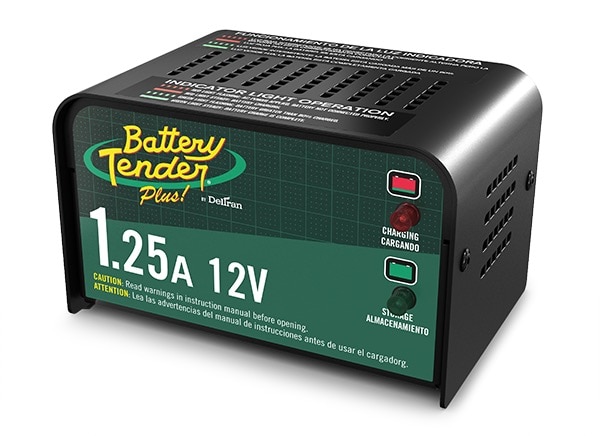
Some purchases carry no fitment risk at all, and those are the easiest online buys there are. Shop accessories are a good example: a battery maintainer for stored vehicles works with any standard 12-volt battery, so there is no VIN lookup, no trim to match, nothing to get wrong — you order it and it works. When a part is universal like that, buying online is a no-brainer.
One myth worth killing while we are here: installing a quality aftermarket part does not automatically void your factory warranty. Under federal law, a manufacturer cannot deny your warranty coverage simply because you used an aftermarket or self-installed part — they would have to show that the specific part actually caused the failure they are declining to cover. So a set of aftermarket brake pads or a new cabin filter is not putting your powertrain warranty at risk. Keep your receipts and a note of what you installed and when, buy quality parts, and you are on solid ground.
Getting Fitment Right the First Time
The number-one online-parts mistake is ordering something that does not fit. Beat it by being precise. Start with your VIN if the site accepts one — it is the most exact way to match parts to your specific vehicle. If you are entering year, make, and model by hand, do not stop there: engine size, trim level, and drivetrain (front-, rear-, or all-wheel drive) can all change which part is correct, and skipping one is how people end up with brake rotors a hair too big or a part for the wrong engine.
When a listing shows a compatibility or fitment chart, actually read it and confirm your vehicle is on it. If there is any doubt, cross-check the part number against your old part before you order. Five minutes of verification up front saves you the return-shipping hassle and the days of downtime that come with getting it wrong.
Some aftermarket parts take the fitment guesswork off the table by being built for one vehicle and year range only, and infotainment is the clearest example. An 11.5-inch Android head unit made for the Jeep Wrangler JK (2007–2018) is cut to that specific dash and wiring harness, so "getting fitment right" just means matching your model and year instead of decoding a universal part number — with a vehicle-specific unit, the product page effectively is the compatibility chart.
Counterfeits and How to Dodge Them
Popular parts — brand-name filters, spark plugs, brake components — get counterfeited, and a fake can look convincing right up until it fails early. The defense is straightforward: buy from established retailers and reputable sellers rather than the cheapest no-name listing on an open marketplace. If a brand-name part is priced far below everyone else, treat that as a warning, not a deal.
Stick with sellers that stand behind what they ship, check packaging and holograms against what the brand describes, and keep your receipt. Reputable parts sites source through legitimate supply chains, which is a quiet but real reason to prefer a known auto-parts retailer over a random third-party listing when the price gap looks too good to be true.
Core Charges, Explained
If you order a rebuildable part — an alternator, a starter, a brake caliper, some axles — you may see a core charge added at checkout. It is not a scam or a hidden fee; it is a refundable deposit. The seller wants your old, rebuildable unit (the core) back, so they charge the deposit up front and refund it when you ship the old part in. Plan for it: budget for the temporary charge, keep the box the new part shipped in, and send the core back promptly so you get your money back.
The only time a core charge bites is when people do not expect it or forget to return the core. Know that it is coming, follow the return instructions, and it costs you nothing in the end.
Tires and Wheels Are Their Own Category
Tires are the one wear item where buying online has an extra wrinkle: they have to be mounted and balanced, so the source you buy from matters as much as the price. This is where a specialist like Tire Rack earns its reputation — deep tire and wheel selection paired with a network of local installers who receive your tires shipped straight to their shop and mount them for you, so you never have to haul them around yourself. The other route is a shop that sells and installs under one roof: Mavis Tires & Brakes lets you order the tires online and book the mount, balance, or alignment at one of its 2,000+ locations in the same order.
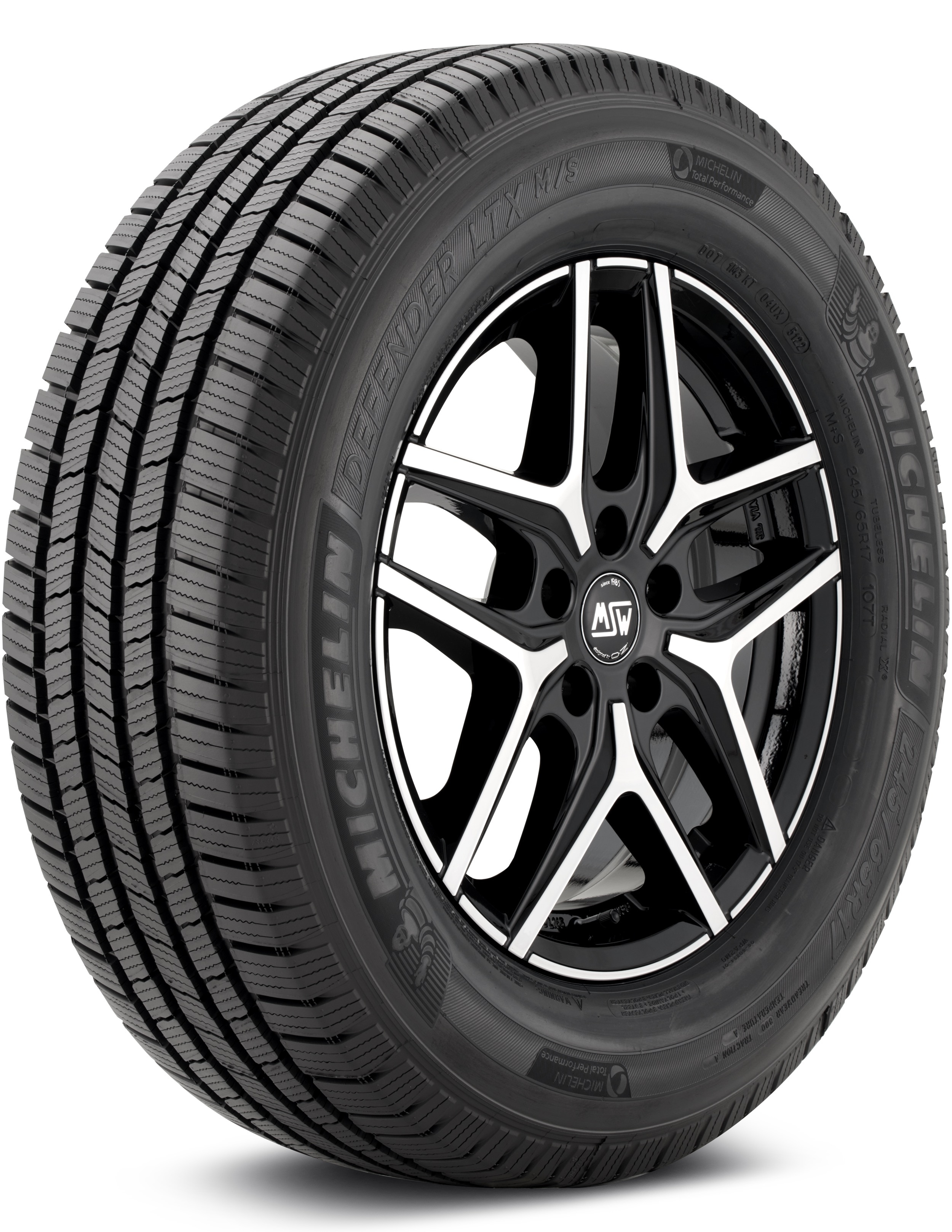
The Michelin Defender LTX M/S2 is a good example of the aftermarket-wear-item logic in action: it is a long-life all-season highway tire for trucks and SUVs, bought to replace a worn set and chosen for tread mileage rather than winter specialization. To be clear, it is an all-season, not a dedicated snow tire — if you need true winter traction, that is a separate three-peak-snowflake purchase. But for year-round highway miles on a truck or SUV, a proven long-wearing tire ordered through an installer network is online parts buying at its easiest.
Affiliate Disclosure