Best Bluetooth OBD2 Adapters That Actually Work With iPhone
iPhones can't use classic Bluetooth OBD2 dongles — only BLE ones. Here's why that trips up so many buyers, and which adapters and apps actually pair with iOS.
Disclosure: This article contains affiliate links. If you buy through them we may earn a commission at no extra cost to you.
The iPhone problem nobody explains on the product page
If you've bought a "Bluetooth OBD2 scanner" and it never showed up in your iPhone's Bluetooth settings, you didn't do anything wrong. Apple's iOS does not support classic Bluetooth (Bluetooth Classic / SPP) serial connections to third-party accessories without Apple's MFi certification — a certification almost no budget OBD2 dongle carries. Most cheap Bluetooth OBD2 adapters on the market use classic Bluetooth because it's cheaper to manufacture and works fine on Android. Plug one into an iPhone and the adapter is invisible to the Bluetooth pairing screen, even though it powers on and its LED blinks normally.
The adapters that do work with an iPhone use Bluetooth Low Energy (BLE) instead, which iOS supports natively through a different protocol stack. The catch: you can't tell BLE and classic Bluetooth apart from a listing photo. The spec sheet or product title has to say BLE, "iOS compatible," or explicitly list an iPhone-compatible app.
No spam. Unsubscribe anytime.
Adapters that are BLE and confirmed iOS-compatible
- Check price on Amazon → — Veepeak OBDCheck BLE. Built specifically for BLE, and the product name calls out iOS/Android compatibility directly — this is the budget pick if your only requirement is "it has to pair with my iPhone."
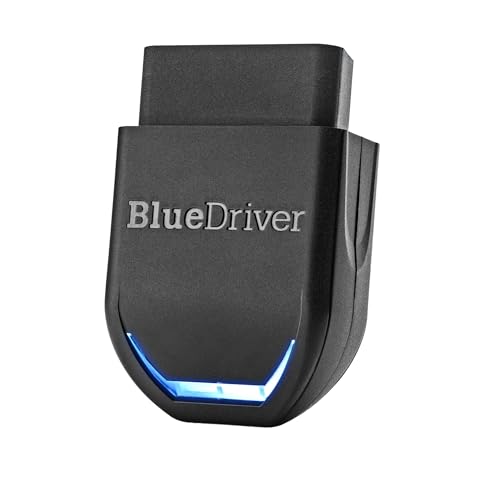
- Check price on Amazon → — BlueDriver Pro Next Gen. Also BLE-based and iOS-native, with the added benefit of BlueDriver's own app and 8,000+ issue-report database — worth the price jump if you want enhanced diagnostics, not just a code reader, alongside guaranteed iPhone pairing.
Both are dongles, not full handheld scanners — the screen and interface live entirely in the paired phone app, which is the point: your phone's screen is bigger and easier to read than any $30-$50 handheld's tiny LCD.
App pairing: which app works with which adapter
This is where most of the confusion actually lives. An adapter being "BLE" doesn't mean any app on the App Store will talk to it — most OBD2 apps are built around a specific manufacturer's Bluetooth protocol.
| Adapter | Companion app | Works with generic 3rd-party OBD2 apps? |
|---|---|---|
| BlueDriver Pro Next Gen | BlueDriver app (required) | No — proprietary protocol, app-locked by design |
| Veepeak OBDCheck BLE | Veepeak OBD app, or generic BLE-compatible OBD2 apps per the listing | Yes, more flexible — works with several third-party apps that support BLE ELM327-style adapters |
| FOXWELL NT301 | N/A — standalone handheld, no app | N/A |
If you want the flexibility of trying different OBD2 apps (torque-style gauges, custom PID readers, and so on), an ELM327-style BLE adapter like the Veepeak is the more open path. If you want one polished app experience with a real diagnostics database behind it and don't mind being locked to it, BlueDriver is the tradeoff worth making.
Common iPhone pairing mistakes to check first
Before assuming an adapter is defective, a few things trip up iPhone owners specifically:
- Pairing through iOS Bluetooth settings instead of the app. Most BLE OBD2 adapters are not meant to be paired in the iPhone's system Bluetooth menu at all — the companion app finds and connects to the adapter on its own. If you go looking for it under Settings > Bluetooth and it's not there, that's often expected behavior, not a failure.
- Background App Refresh disabled for the OBD2 app. iOS aggressively manages background Bluetooth connections; if the app is set to never refresh in the background, a live-data session can drop the moment you switch apps or lock the phone.
- An older adapter genuinely running classic Bluetooth. If a listing photo shows a generic black rectangular dongle with no mention of BLE or iOS anywhere in the description, it's worth assuming it's classic Bluetooth and will not pair with an iPhone at all, regardless of what a review claims.
- Multiple OBD2 apps installed at once. iOS can only maintain one active BLE connection to the adapter at a time. If a second OBD2 app is still running in the background from a previous session, a new app's attempt to connect can silently fail or time out — fully closing other OBD2 apps first typically resolves this.
Why this matters more on iPhone than Android
Android has historically been more permissive about classic Bluetooth serial connections to accessories, which is part of why so many budget OBD2 dongles were designed around that protocol in the first place — it's cheaper hardware, and it worked without friction on the more common platform. iPhone owners are effectively paying a small tax for a stricter platform: fewer adapter choices, but the ones that do work tend to be more consistent, because they were built against Apple's BLE accessory requirements rather than a looser standard. That's part of why BlueDriver, despite being the pricier option, has a reputation for reliable iPhone pairing — it was engineered against that constraint from the start rather than retrofitted to it.
What handheld scanners sidestep entirely
If pairing headaches aren't worth it to you, a standalone handheld like the FOXWELL NT301 skips Bluetooth and iPhone compatibility questions completely — it has its own screen and buttons and plugs directly into the OBD2 port with no phone involved. That's a reasonable choice if you just want a tool that works the same way every time, without a software update ever breaking the pairing. For more on handheld vs. dongle tradeoffs generally, see our scanners under $100 roundup.
If what you actually need is deeper module coverage rather than just an iPhone-friendly connection — say you're chasing an ABS or transmission light — check our guide to scanners that read ABS, airbag, and transmission codes before choosing based on Bluetooth compatibility alone. And if your iPhone-paired scanner only ever shows a check-engine code with no other symptoms, our piece on reading a check engine light yourself covers what to do with that code once you have it.
The bottom line
iPhone owners should buy an adapter explicitly listed as BLE or iOS-compatible — never assume a "Bluetooth OBD2 scanner" works with iOS just because the listing says Bluetooth. The Veepeak OBDCheck BLE is the budget-friendly, app-flexible pick; the BlueDriver Pro Next Gen costs more but pairs just as reliably and adds a real diagnostics database on top. If you'd rather not deal with pairing at all, a standalone handheld like the FOXWELL NT301 removes the phone from the equation entirely.
Affiliate Disclosure