Winter Car Emergency Kit for a Teen Driver: Build or Buy
A new driver's first winter comes with roadside risks they haven't dealt with yet. Here's what a real emergency kit needs, and whether building one beats buying one.
Disclosure: This article contains affiliate links. If you buy through them we may earn a commission at no extra cost to you.
A new driver's first winter is the first time they'll deal with a dead battery in freezing weather, a stuck door in an ice storm, or a stall on an unfamiliar road with no idea who to call first. The gap isn't intelligence — it's experience, and an emergency kit is a way to hand over some of that experience in physical form before they need it for real.
The build-it-yourself checklist
If you'd rather assemble a kit piece by piece — often cheaper, and lets you tailor it to your teen's specific car and region — here's what actually earns a spot, based on the roadside scenarios new drivers most commonly report running into:
No spam. Unsubscribe anytime.
- A jump starter. Dead batteries from an interior light left on, or a cold morning that a marginal battery can't survive, are one of the most common new-driver roadside calls. A compact, simple unit is the priority here — a teen driver needs something they can operate without a manual, not a device with a learning curve at 7am in a parking lot.
- A tire inflator. A low tire from cold-weather pressure drop is a routine event, not an emergency, but only if there's a way to fix it before it becomes one.
- An emergency escape tool. For sinking or submerged-vehicle scenarios, a spring-loaded window punch and seatbelt cutter is a genuinely important item that costs very little, and one most new drivers have never thought about needing.
- A basic first aid kit, gloves, and a flashlight. Standard inclusions, easy to source separately, and worth checking that the flashlight has fresh batteries each fall.
- Instructions, taped to the item itself. A jump starter a teen has never used before is far less useful mid-panic than one with a laminated quick-reference card zip-tied to the clamps.
The pre-made kit approach
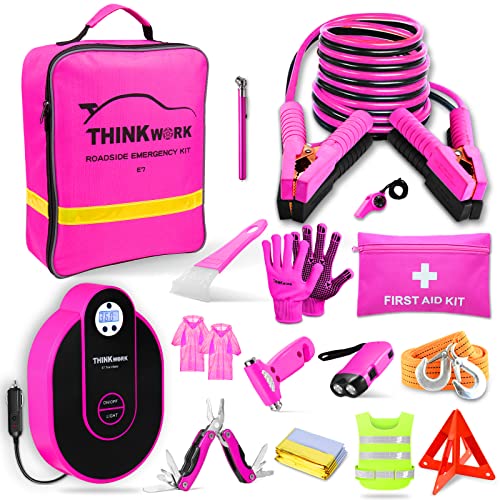
The advantage of a pre-assembled kit is that someone has already done the "what actually belongs in here" thinking, and it typically comes in a single bag that's easy to hand over and explain once, rather than a pile of separately sourced items a teen has to remember exist. The THINKWORK car emergency kit is built specifically around this new/young-driver use case, per its product listing, bundling a compressor and jumper cables along with the smaller items a first kit typically needs — which covers both of the two biggest roadside failures (dead battery, low tire) in one bag rather than requiring separate purchases.
What a pre-made kit still might be missing
Even a well-assembled bundle is worth checking against your teen's specific car before calling it complete. Jumper cables included in a general kit are sized for typical passenger cars, which is fine for most first cars but worth verifying against your teen's actual battery terminal spacing and engine bay layout. It's also worth adding a dedicated escape tool if the kit doesn't include one — the Amazon Basics emergency escape tool 2-pack is inexpensive enough to add without much thought, and having two means one can live in the glovebox and one clipped somewhere reachable from the back seat.
The one thing that matters more than the gear
None of this helps if a teen driver has never actually used the jump starter or escape tool before the day they need it. Per most new-driver safety guidance, a single supervised practice run — actually clamping the jump starter to a battery in the driveway, actually testing the escape tool's window punch on an old windshield piece or per the manufacturer's demonstration — turns a kit from theoretical to actually usable under stress. A teen who's touched the gear once in daylight, calmly, is far more likely to use it correctly at night, cold, and rattled.
Where to add a standalone jump starter
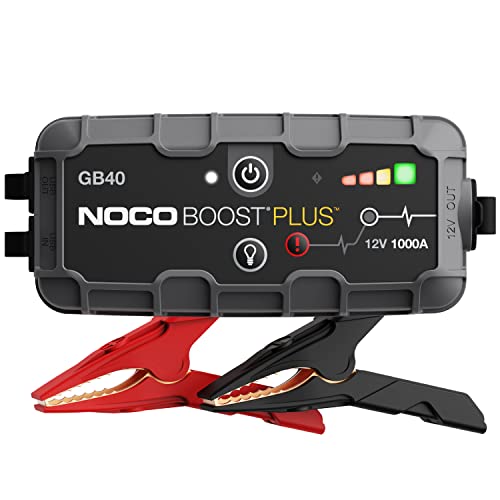
If the pre-made kit's included jump function feels underpowered for your teen's specific car, or you'd rather have a name-brand unit with a longer track record, the NOCO Boost GB40 is a straightforward, widely recommended standalone option that covers the large majority of cars new drivers are likely to be driving. It pairs well alongside a general kit rather than replacing it — keep the kit's first-aid and escape items, swap in a dedicated jump starter if you want more confidence in that specific function.
Talking through "what if" scenarios, not just handing over gear
A kit sitting in the trunk doesn't do much good if a teen driver has never thought through when to use each item. It's worth a short conversation, not a lecture, covering a few concrete "what if" scenarios: what if the car won't start in the school parking lot before anyone else is around, what if a tire warning light comes on during a highway drive, what if the car goes into a ditch off an icy back road. Walking through the decision — use the kit, call a parent, call roadside assistance, or call 911 — before it happens removes a layer of panic-driven guessing in the moment it's actually needed.
Where the kit should live, and where it shouldn't
Cold matters for gear, not just people. A jump starter left loose in an unheated trunk all winter loses some of its cold-weather output, as covered in our guide on leaving a jump starter in the car through winter — the short version is that lithium units handle this reasonably well but still benefit from not being fully exposed to the coldest air, for example tucked under a seat rather than loose in the trunk. Whatever kit you build or buy, spend a minute thinking about where in the car it actually lives, not just that it exists somewhere in the vehicle.
The bottom line
Whether you build a kit from individual items or start from the THINKWORK teen driver kit, the checklist that matters is: a way to jump a dead battery, a way to air up a low tire, an escape tool, basic first aid, and — most importantly — a teen who's actually practiced using all of it once before winter arrives. Add a standalone NOCO Boost GB40 if you want more confidence in the jump-start function specifically, and an extra escape tool so there's a spare within reach from any seat.
Affiliate Disclosure