Best Jump Starter to Leave in Your Car All Winter
A jump starter that dies in the glovebox by January isn't helping anyone. Here's how self-discharge rate and cold-weather output actually work, and which units are built to survive it.
Disclosure: This article contains affiliate links. If you buy through them we may earn a commission at no extra cost to you.
The whole point of a glovebox jump starter is that it works the one time a year you actually need it — usually on the coldest morning of the year, after it's sat untouched in a freezing car for weeks. That's a worse test than any lab number on the box, because two things work against you at once: the unit's own self-discharge over time, and reduced chemical output once its internal temperature drops. A unit that's fine in a heated garage can disappoint in a car that's been parked outside since November.
Lithium vs. lead-acid in a cold car
The two chemistries behave differently once temperatures drop, and it's worth understanding both before deciding what lives in your trunk all season.
No spam. Unsubscribe anytime.
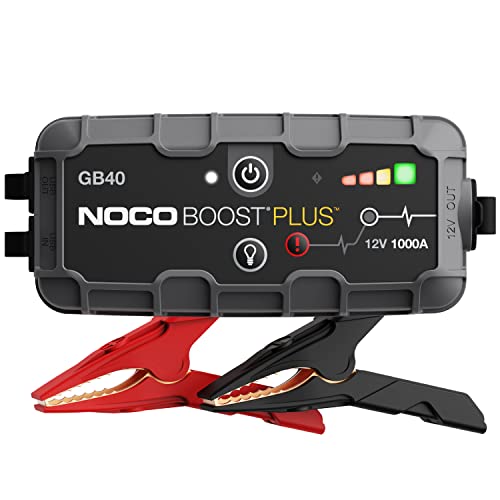
Lithium jump starters (like the NOCO Boost line) hold their charge for months at a time with low self-discharge, per manufacturer documentation, which is why they're the default recommendation for "leave it and forget it" use. The tradeoff is that lithium cells output less peak current as their internal temperature drops, so a unit that's rated 1000A at room temperature will deliver less than that on a truly cold start. NOCO's engineering response to this is a built-in low-temperature cutoff and thermal protection circuit — the unit won't attempt a jump if its internals are dangerously cold, protecting the cells at the cost of occasionally needing a few minutes to warm up first.
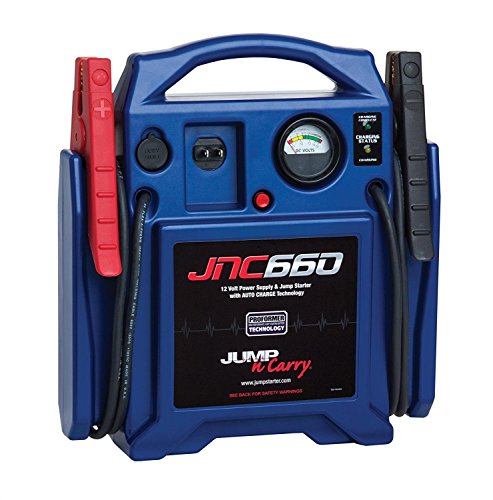
Lead-acid jump packs (like the Clore JNC660) use a sealed lead-acid battery internally, which has a different self-discharge curve — typically higher monthly self-discharge than lithium, meaning a lead-acid unit left unused and uncharged over a whole winter is more likely to need a top-off before it can deliver full output. Owners consistently report that lead-acid units do best when kept on a maintenance charger through the off-season rather than stored and forgotten, which makes them a better fit for a garage wall than a trunk.
Self-discharge: what the spec sheet actually promises
Per NOCO's product documentation, the Boost GB series is designed to hold a usable charge for extended storage periods without a top-up, which is the specific feature that makes it viable as a "leave it in the car" unit rather than one you have to remember to charge monthly. That said, "holds a charge" isn't the same as "immune to cold" — a fully charged lithium pack still loses available peak output as it cold-soaks, it just isn't losing capacity from sitting unused the way a lead-acid battery would.
What actually happens at single-digit temperatures
Manufacturer documentation on lithium jump starters generally notes that below a certain internal temperature, the unit's protection circuit will prevent a jump attempt until it warms slightly, which is a safety feature rather than a defect — attempting to pull high current through a stone-cold lithium cell is a real risk to the cell itself. Practically, this means owners in genuinely cold climates get better results keeping the unit somewhere it isn't fully exposed to ambient cold all night — under a seat, wrapped in a small insulated pouch, or brought inside overnight when a hard freeze is expected — rather than left loose in an unheated trunk.
Which unit to leave in the car
For most drivers, the NOCO Boost GB40 is the practical pick for winter glovebox duty: it's compact, its lithium chemistry holds charge well over weeks of non-use per NOCO's documentation, and 1000 peak amps covers the large majority of gas engines even with some cold-weather output reduction factored in. Owners of larger diesel trucks who want the same "leave it and trust it" behavior but with more headroom should look at the NOCO Boost GB70 — the extra rated capacity gives more margin against the output loss that comes with a cold soak.
If the unit's real home is a garage wall rather than a moving vehicle, and it gets periodic maintenance charging, the Clore JNC660 is still a widely reported shop favorite for that use case — its sealed lead-acid design is built around staying on a charger between uses, not surviving months of neglect in a cold trunk.
A quick winter maintenance habit
Whichever unit you choose, a five-minute habit protects it through the season: check the charge indicator once a month, and top it off any time it reads below half, rather than waiting for a red light. This matters more for lead-acid units, which lose usable capacity faster when left low through cold weather, but it's cheap insurance either way. A jump starter that's been quietly discharging behind the driver's seat since October is not a jump starter — it's a paperweight with an LED light on it.
The bottom line
For a genuine glovebox-and-forget-it winter jump starter, lithium wins on self-discharge and the NOCO Boost GB40 is the right size for most cars and light trucks. Diesel owners should size up to the NOCO Boost GB70 for the same cold-weather margin at higher amps. If the unit lives in a garage and gets maintenance charging rather than sitting untouched, a lead-acid unit like the Clore JNC660 remains a solid, widely used option. For a full breakdown of which amp tier fits your engine before you buy, see our amps-by-engine chart.
Affiliate Disclosure